|
|
|
|
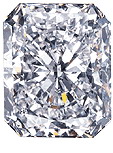
As far as I know, it proportions and, to a lesser extent, the facet pattern makes the differences you point out. Radiants and princesses come with a few cut variations - but changing proportions esp, for radiant cuts makes allot of difference.
And no, the drawings of the clarity plots on GIA or other lab reports do not mirror the actual facet pattern of each stone. Those are ''conventional maps'' if you wish. About Royal Asscher (RA) and square step cuts... you may want to search the "Rocky Talky'' forum for this topic - there have been quite a few examples posted over time. All in all, RAs are ''modified square step cut'' and the others ''square emerald cut'' and less common ''octagonal step cut'' (if the corners are cut so deep, the corner facets are as long as the N-S-E-W ones). The difference is the number of facets - the RAs have one more row of steps on the pavilion. However, this is not a unique feature of Royal Asscher diamonds - there are no-name square step cut diamonds with extra pavilion facets, so the name of the cut on the GIA report does not identify RA diamonds. These are also engraved with a specific logo, so that helps. Not that it makes allot of difference - there is no huge supply of Royal Asscher diamonds and you would know that you are buying one... no confusion there. The particular look of the RA also comes from proportions - these are quite some cherries! The no-name square step cuts with the same facet layout (i.e. extra steps on pavilion) don''t necessarily come with optimized proportions. This is about all that comes to mind... There are examples of all those types of lab reports mentioned here in older threads (look up things from the past two months or so). Hope this helps ![]() |