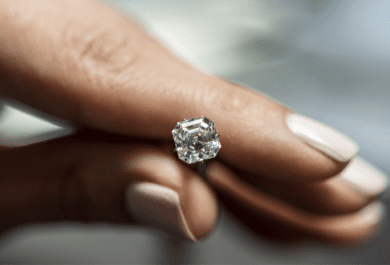
April Birthstone: The Diamond
We don’t talk about birthstones every single month, but we love any opportunity to talk about our favorite gemstones. Diamonds are among our favorite gemstones. The diamond is the birthstone…

*Link to New Precious Metals Tutorial*
Karat Gold
24K gold is called pure gold or fine gold. (99.99% pure) The color of fine gold is a bright yellow with a bit of orange. Some say it is too soft for jewelry application, but high karat gold is commonly worn in some parts of the world, and it is growing in popularity in designer jewelry. Most will prefer karat golds for their engagement rings, because of the needed hardness to hold a gemstone.
Karat golds are made durable by melting 24K pure gold with other metals to make an alloy. 18K gold (the best gold for most purposes) is “eighteen twenty fourths” 18/24 or 75% gold. The color and the intended use of the karat gold will determine what other metals will be melted with the gold.
Gold Colors
The most popular color is yellow which is made by adding silver and some copper. The metals are melted together to form an alloy of the desired color and karat. It is very important that all the ingredients are pure and that the amounts of each are weighed very accurately to prevent porosity, which weakens the alloy.
There are two main types of White Gold; those used in bands and those for settings. Nickel is added to gold producing a hard white gold, which is ideal for bands of rings, but because it is too tough and brittle it is not used on gem settings.
Palladium is used to make white gold for gem settings producing a pliable metal with a very high melting point, so jewelers do not melt very fine settings and filigree work as they solder them together. Platinum is sometimes added to these alloys to improve certain features.
White gold was invented after the First World War, and until that time all white jewelry was made with platinum or silver. This set off the art deco style of white jewelry during the 1920’s and 1930’s.
Pink, Rose, or Red gold is made by adding more copper than silver. Pink gold was the only lower karat gold available until after the First World War, when trained metallurgists discovered the addition of a tiny amount of zinc created a 10K yellow gold alloy. Rose gold is growing in popularity, and there are a number of alloys available in several pink or peach hues.
10 karat Gold – The lowest common gold alloy is not considered gold in some places, as the content is less than %50 gold. It’s hard, but it can tarnish a bit. It’s lighter in color and considered a low-end alloy,
12 karat The strongest gold alloy out there, half gold and equal parts silver and copper is very hard. It is not commonly used except as an overlay on gold filled jewelry.
14 karat The most common mid-grade alloy available. It’s popular in the US, and it holds up well. It’s the most common for decent quality jewelry.
18 karat Considered high quality in the states, and it’s 75% pure. It shows a richer color, and it is a softer metal.
20k, 22k and 24k Very soft and almost pure or pure with a deep rich color. It’s the norm in Asia and the Middle East and has ancient cultural associations.
White alloys:
There are two kinds of White Gold: Nickel based and Palladium based. Some people are allergic to Nickel, so Palladium white gold is a good alternative. Palladium white gold is the only legal alloy in Europe. It also self burnishes and keeps a polish.
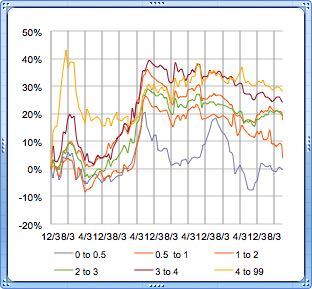
Retail Diamond Prices Chart Updated Monthly.

We don’t talk about birthstones every single month, but we love any opportunity to talk about our favorite gemstones. Diamonds are among our favorite gemstones. The diamond is the birthstone…
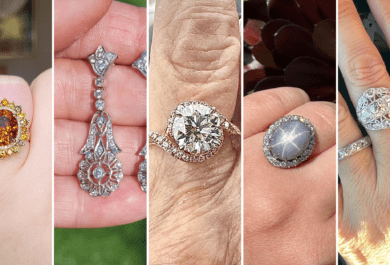
So long, March; hello again, April. We love seeing all the new jewelry pieces posted by PriceScope community members! We are thrilled to see that your collections are growing beautifully,…
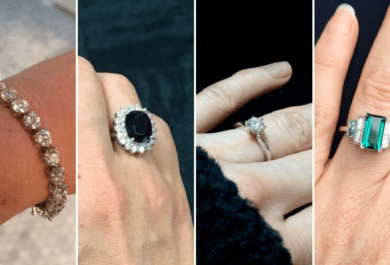
March has come and is on its way out. In like a lion, out like a slightly less disgruntled lion, it seems. With that being said, our love of jewelry…