Sithathoriunet
Brilliant_Rock
- Joined
- Sep 21, 2008
- Messages
- 1,686
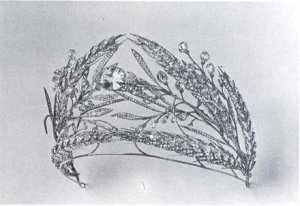
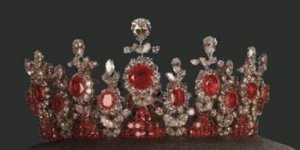
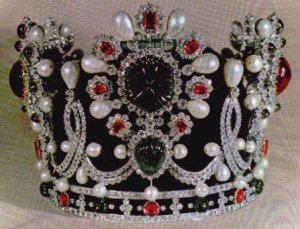
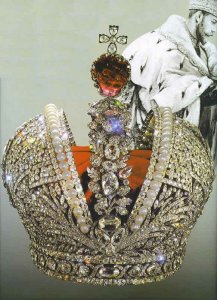
The Ears of Wheat tiara that belonged to Maria Fyodorovna, wife of Paul I Petrovich.
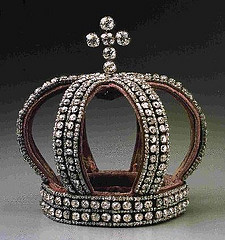
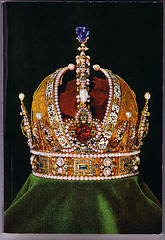
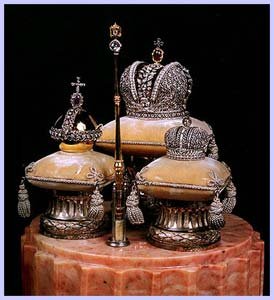
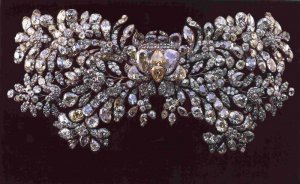
Yes I did realize, hence my post to that affect. We were in process at the same time - you were posting as I was processing the photos. Don't worry, I'm outta the rj club. Bye!Date: 4/13/2009 9:14:21 PM
Author: Sithathoriunet
fear not, got em already....Date: 4/13/2009 9:04:19 PM
Author: musey
Date: 4/13/2009 6:26:07 AM
Author: Imdanny
http://home-and-garden.webshots.com/photo/2712996200031751182qTaaBh
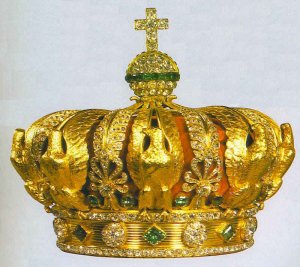
French Crown Jewels the Empress Eugenie Brooch with the Mazarine Diamonds
but thankyou

What an odd thing to say. Did I not thank you for helping me? Was I not polite to you? This isn''t a club! Everyone is welcome to post here. It doesn''t even belong to us. It belongs to pricescope. Are there cliques at pricescope? If there are, there shouldn''t be.Date: 4/13/2009 9:45:59 PM
Author: musey
Date: 4/13/2009 9:14:21 PM
Author: Sithathoriunet
Date: 4/13/2009 9:04:19 PM
Author: musey
Date: 4/13/2009 6:26:07 AM
Author: Imdanny
http://home-and-garden.webshots.com/photo/2712996200031751182qTaaBh
French Crown Jewels the Empress Eugenie Brooch with the Mazarine Diamonds
fear not, got em already....
but thankyou
Yes I did realize, hence my post to that affect. We were in process at the same time - you were posting as I was processing the photos. Don''t worry, I''m outta the rj club. Bye!


careful here now, when you use the words, "my post was very obviously not directed at you" you are being condescending. when you speak to someone and use the word ''obviously'' with direct condentation meaning "you should know"..it is a bit unpolite to that person and can be taken to be talking down to someone. that was not nice.and also, you were a bit rude when saying to my post that it was unnecessary...just watch your wordings, as you easily offended 2 people with only one post.Date: 4/13/2009 10:33:07 PM
Author: musey
Imdanny, my post was very obviously not directed at youI was just pointing out that I''d already acknowledged the double posting (to Sithathoriunet), and that her addressing of it was unnecessary.
My allusion to a ''club'' was nothing more than acknowledgment that I''d noticed there are a few posters that post here and nowhere else. It''s the equivalent of referring to TTC or Preggo PSers or WWT as a ''club.'' You need not take posts so personally!
hey!Date: 4/13/2009 11:04:07 PM
Author: Imdanny
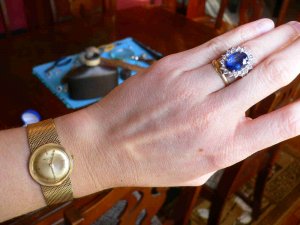
Jenna, a quick OT post (thank you for your indulgence everyone; I promise I will post more pictures tonight!). If you could have one ring and it could be gold or platinum, which one would you choose and why? Briefly could you give me your viewpoint on this question? I''ve noticed that you''ve posted pictures of a lot of fine gold pieces in this thread (including some reproductions of royal jewelry that you own) and so I''d like to know your thoughts on this. Thanks!
If you spent time in the rest of the forum, you''d have a better understanding of the tone of musey''s post. I see nothing wrong or offensive about her post.Date: 4/13/2009 10:51:38 PM
Author: Sithathoriunet
careful here now, when you use the words, ''my post was very obviously not directed at you'' you are being condescending. when you speak to someone and use the word ''obviously'' with direct condentation meaning ''you should know''..it is a bit unpolite to that person and can be taken to be talking down to someone. that was not nice.and also, you were a bit rude when saying to my post that it was unnecessary...just watch your wordings, as you easily offended 2 people with only one post.Date: 4/13/2009 10:33:07 PM
Author: musey
Imdanny, my post was very obviously not directed at youI was just pointing out that I''d already acknowledged the double posting (to Sithathoriunet), and that her addressing of it was unnecessary.
My allusion to a ''club'' was nothing more than acknowledgment that I''d noticed there are a few posters that post here and nowhere else. It''s the equivalent of referring to TTC or Preggo PSers or WWT as a ''club.'' You need not take posts so personally!
people do take words personally, weather it be spoken or written, and it can easily put someone on the defensive, so be careful, this is a public forum, and so as i have pointed out before, many people are watching, and you do not know who may be watching or taking offense.
it did seem to me as well you meant a jab. and so, it was the wording you just used, it''s all in how you said it. and scolding imdanny for mistaking your comments was not appropriate..someone took offense...that needs to indicate to you that you may have worded something offensively with or without knowing it.
wrongo frekechild,Date: 4/14/2009 12:08:37 PM
Author: FrekeChild
Date: 4/13/2009 10:51:38 PM
Author: Sithathoriunet
Date: 4/13/2009 10:33:07 PM
Author: musey
Imdanny, my post was very obviously not directed at youI was just pointing out that I''d already acknowledged the double posting (to Sithathoriunet), and that her addressing of it was unnecessary.
My allusion to a ''club'' was nothing more than acknowledgment that I''d noticed there are a few posters that post here and nowhere else. It''s the equivalent of referring to TTC or Preggo PSers or WWT as a ''club.'' You need not take posts so personally!
careful here now, when you use the words, ''my post was very obviously not directed at you'' you are being condescending. when you speak to someone and use the word ''obviously'' with direct condentation meaning ''you should know''..it is a bit unpolite to that person and can be taken to be talking down to someone. that was not nice.and also, you were a bit rude when saying to my post that it was unnecessary...just watch your wordings, as you easily offended 2 people with only one post.
people do take words personally, weather it be spoken or written, and it can easily put someone on the defensive, so be careful, this is a public forum, and so as i have pointed out before, many people are watching, and you do not know who may be watching or taking offense.
it did seem to me as well you meant a jab. and so, it was the wording you just used, it''s all in how you said it. and scolding imdanny for mistaking your comments was not appropriate..someone took offense...that needs to indicate to you that you may have worded something offensively with or without knowing it.
If you spent time in the rest of the forum, you''d have a better understanding of the tone of musey''s post. I see nothing wrong or offensive about her post.
Your post is actually the epitome of condescension. Musey has been around PS for long enough, and posted enough things that she certainly knows all about internet decorum.
????????????????????????????????????????????????????????Date: 4/14/2009 3:11:07 PM
Author: musey
Um... wow.
No ''cliques'' on PS, eh, Imdanny?
Amen.Date: 4/14/2009 3:30:21 PM
Author: Linda W
Please be reminded that no one ''owns'' the Royal Jewel Thread, except Pricescope itself. It is here for all members to enjoy and post pictures of lovely Royal jewels.

300x240.png)